2020: Statues, Protest and the Fight Over Colonial Memory
How George Floyd’s murder drove global protests, toppled colonial statues and forced institutions to confront slavery, empire and public memory.
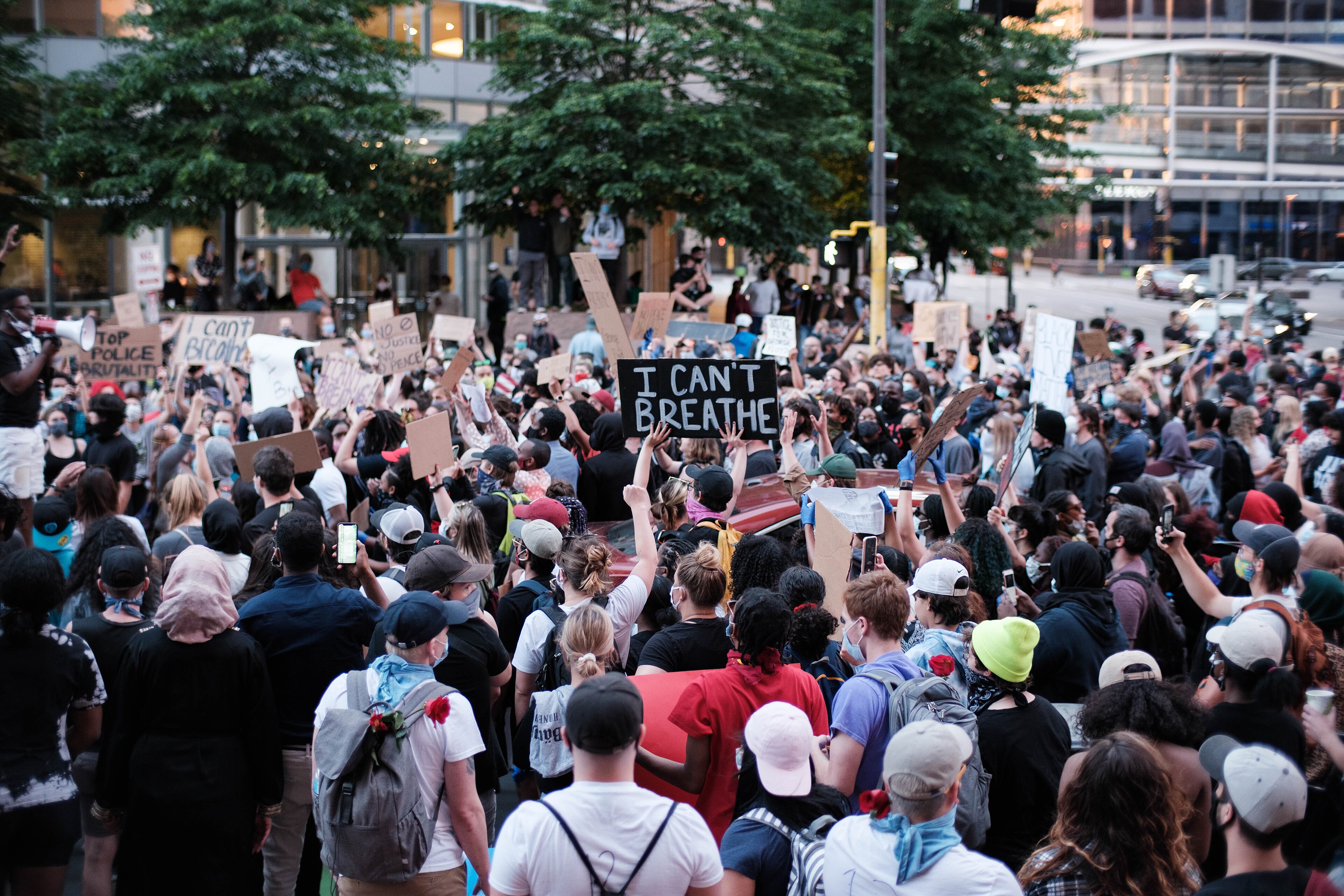
In 2020, the police murder of George Floyd transformed an existing struggle against anti-Black violence into a global reckoning with slavery, empire and commemoration. Demonstrators challenged not only policing but also the statues, street names and institutions that had made enslavers and colonial conquerors appear honorable.
The confrontation exposed monuments as political instruments rather than neutral records. From Minneapolis and Bristol to Brussels and Cape Town, campaigns connected present-day inequality to the histories documented in modern racism, while direct action forced changes that decades of petitions had not secured.
Key takeaways
- George Floyd’s murder on May 25, 2020, triggered a global movement against police violence and the public celebration of colonial power.
- Researchers estimated that 15 million to 26 million people joined US Black Lives Matter protests by June 2020.
- ACLED found that more than 93% of racial-justice demonstrations recorded between May 24 and August 22, 2020, were peaceful.
- The toppling of Edward Colston’s statue made Bristol a defining site in the international struggle over colonial memory.
- Removing a monument does not erase history; it withdraws public honor while allowing archives and museums to preserve evidence.
- The reforms following 2020 were uneven, combining criminal convictions and memorial changes with limited structural transformation of policing and wealth.
Before 2020: violence, memory and unfinished campaigns
Public monuments had long concealed the coercion behind imperial wealth. Britain commemorated slave trader Edward Colston while minimizing the approximately 84,000 enslaved Africans carried by ships associated with the Society of Merchant Venturers during his involvement from 1680 to 1692, according to the organization’s 2020 historical statement. Belgium monumentalized King Leopold II despite demographic studies placing the population loss in the Congo Free State between roughly 1 million and 10 million people from 1885 to 1908; historian Adam Hochschild popularized the upper estimate in 1998, while scholars including Jean Stengers warned that surviving evidence cannot sustain a precise death toll.
Movements already contested this landscape. Rhodes Must Fall began at the University of Cape Town on March 9, 2015; Oxford activists then demanded the removal of Cecil Rhodes from Oriel College. In the United States, campaigns against Confederate memorials accelerated after a white supremacist murdered 9 Black worshippers at Charleston’s Emanuel AME Church on June 17, 2015, and after the deadly Unite the Right rally in Charlottesville on August 12, 2017.
“Why should we not form a secret society with but one object, the furtherance of the British Empire?” — Cecil Rhodes, 1877, Confession of Faith.
The quotation makes explicit what commemorative defenses often obscured: Rhodes understood expansion and white settler power as political projects. See modern racism for the institutional afterlives of those projects.
What happened in 2020
On May 25, 2020, Minneapolis police officer Derek Chauvin murdered George Floyd, an unarmed 46-year-old Black man, by pressing a knee on his neck for 9 minutes 29 seconds. Officers J. Alexander Kueng, Thomas Lane and Tou Thao failed to stop him. Video recorded by 17-year-old Darnella Frazier contradicted the initial police account and made Floyd’s repeated words—“I can’t breathe”—a global indictment.
Protests began in Minneapolis on May 26, 2020, then spread across every US state and internationally. On June 7, protesters in Bristol pulled down Edward Colston’s statue, rolled it through the streets and pushed it into the harbor. Belgian demonstrators defaced statues of Leopold II; London authorities temporarily boxed in monuments, while campaigners compiled the Topple the Racists map. Institutions renamed buildings, reviewed collections and confronted fortunes derived from enslavement.
| Date | Event | Consequence |
|---|---|---|
| May 25, 2020 | Derek Chauvin murders George Floyd in Minneapolis | Frazier’s video exposes the killing worldwide |
| May 26, 2020 | Demonstrations begin in Minneapolis | Protests spread nationally and internationally |
| May 29, 2020 | Chauvin is arrested | Prosecutors initially charge third-degree murder and manslaughter |
| June 1, 2020 | Police clear Lafayette Square in Washington, DC | Force against demonstrators intensifies scrutiny of policing |
| June 5, 2020 | Washington, DC, paints “Black Lives Matter” near the White House | The slogan enters monumental civic space |
| June 7, 2020 | Protesters topple Colston’s statue in Bristol | Britain’s imperial memorials become a national dispute |
| June 9, 2020 | Antwerp removes a damaged Leopold II statue | Belgian authorities begin additional memorial reviews |
| June 10, 2020 | Oriel College’s governing body supports removing Rhodes | Legal and donor constraints delay implementation |
| June 19, 2020 | Juneteenth demonstrations occur across the United States | Emancipation history gains wider public attention |
| July 15, 2020 | Bristol displays Marc Quinn’s sculpture of Jen Reid | Officials remove the unauthorized work on July 16, 2020 |
| October 9, 2020 | The Colston statue enters museum conservation | Protest damage becomes part of the artifact’s interpretation |
The numbers: protest, policing and monuments
The Armed Conflict Location & Event Data Project recorded more than 10,600 US demonstrations from May 24 to August 22, 2020, including over 7,750 associated with Black Lives Matter. ACLED classified more than 93% of those racial-justice demonstrations as peaceful in its 2020 report. Crowd Counting Consortium researchers estimated that 15 million to 26 million US residents participated in Black Lives Matter protests by June 2020, potentially making them the largest protest movement in US history.
Federal deployment was substantial: the US Government Accountability Office reported in 2021 that 40 federal agencies sent personnel to Washington, DC, during May and June 2020. Amnesty International documented 125 incidents of police violence against protesters and others in 40 US states and the District of Columbia between May 26 and June 5, 2020.
These categories are not interchangeable: demonstrations count events, while the 15 million–26 million range estimates people. Nor does a peaceful-event percentage erase injuries, property destruction or lethal incidents; it corrects the false characterization of an overwhelmingly peaceful movement as uniformly riotous.
What 2020 set in motion
The protests produced institutional concessions but not a general transfer of power. Minneapolis City Council members pledged on June 7, 2020, to dismantle the existing police department, yet voters rejected a replacement Department of Public Safety proposal by 56% to 44% on November 2, 2021. Chauvin was convicted on all 3 state counts on April 20, 2021, and sentenced to 22.5 years on June 25, 2021; a federal sentence of 21 years followed on July 7, 2022. Kueng, Lane and Thao were convicted in federal court in 2022 of violating Floyd’s civil rights.
Monument campaigns achieved visible changes. The Southern Poverty Law Center counted 168 Confederate symbols removed or renamed in the United States during 2020, compared with 94 during 2017. The National Trust reported in 2021 that 25 contested heritage sites were removed or altered in Britain during 2020. Such inventories use different definitions and should not be combined.
The central question was not whether history should remain visible, but who had authority to define honor in public space.
Universities and museums expanded provenance research, slavery inquiries and community consultation. Critics also documented symbolic substitution: diversity statements could coexist with racialized policing, precarious labor and investment linked to extraction. Lasting change requires organized action, access to archives and material accountability, not commemorative reform alone.
How 2020 is remembered
Supporters remember 2020 as a mass democratic refusal of police impunity and colonial veneration. Opponents emphasize disorder, disputed tactics or alleged attacks on heritage. The conflict persists because statues distribute legitimacy: their scale, placement and inscriptions tell viewers whose violence the state considers foundational or forgivable.
The Colston statue now lies horizontally in Bristol’s M Shed, displayed with protest paint and the ropes used to pull it down. That curatorial decision preserves both the 1895 monument and its overthrow on June 7, 2020. In Oxford, Oriel College retained the Rhodes statue after a 2021 review, citing regulatory and financial barriers, while adding contextual measures. These divergent outcomes show that memory struggles move through streets, courts, planning systems, universities and museums.
Floyd’s murder remains the catalyst, but the year’s wider significance lies in historical connection. Protesters linked a contemporary killing to slave-produced wealth, colonial conquest and the racial ordering examined in modern racism. The continuing question is whether institutions convert recognition into restitution and structural reform. Readers can find practical routes for participation at action.
Sources & further reading
- ACLED: Demonstrations and Political Violence in America, 2020
- Crowd Counting Consortium: Black Lives Matter protest size estimates
- Amnesty International: The World Is Watching, 2020
- Southern Poverty Law Center: Whose Heritage? Public Symbols of the Confederacy
- Bristol Museums: The Colston statue
- UK National Trust: Interim Report on Connections to Colonialism and Historic Slavery, 2020
Frequently asked questions
- Why did statues become targets during the 2020 protests?
- After Derek Chauvin murdered George Floyd on May 25, 2020, protesters connected police violence to longer histories of slavery and colonial rule. Statues of Edward Colston, King Leopold II and Confederate leaders publicly honored people or regimes responsible for enslavement, conquest and racial terror. Campaigners argued that removal ended civic celebration rather than suppressing historical evidence.
- How many people participated in the 2020 Black Lives Matter protests?
- Crowd Counting Consortium researchers estimated in June 2020 that between 15 million and 26 million people had participated in US Black Lives Matter demonstrations. ACLED separately recorded more than 7,750 Black Lives Matter demonstrations from May 24 through August 22, 2020. Participant estimates and event totals measure different things and should not be treated as competing figures.
- Were most Black Lives Matter protests in 2020 violent?
- No. ACLED’s 2020 analysis classified more than 93% of US racial-justice demonstrations between May 24 and August 22 as peaceful. Amnesty International nevertheless documented 125 incidents of police violence in 40 states and Washington, DC, between May 26 and June 5, 2020. Some events involved property destruction or clashes, but these were a minority of recorded demonstrations.
- What happened to the Edward Colston statue in Bristol?
- Protesters pulled down the statue of slave trader Edward Colston on June 7, 2020, dragged it through Bristol and pushed it into the harbor. Authorities recovered it on June 11, 2020. Bristol’s M Shed later displayed it horizontally, retaining its protest paint and damage alongside placards and ropes, thereby documenting both its installation in 1895 and its overthrow.
- What happened to Derek Chauvin and the other officers?
- A Minnesota jury convicted Derek Chauvin of second-degree murder, third-degree murder and second-degree manslaughter on April 20, 2021. He received a 22.5-year state sentence on June 25, 2021, and a concurrent 21-year federal sentence on July 7, 2022. J. Alexander Kueng, Thomas Lane and Tou Thao received federal convictions in 2022 for violating George Floyd’s civil rights.
Related chapters
Years
- 1492 and the Opening of the Atlantic World
- 1519–1521: The Spanish Conquest of the Aztec Empire
- 1652: The Founding of the Dutch Cape Colony
- 1757: Plassey and the East India Company’s Conquest
- 1791–1804: The Haitian Revolution
- 1833–1838: British abolition and slave-owner compensation
- 1857: The Indian Rebellion against Company Rule
- 1884–1885: Berlin Conference and Africa’s Partition
- 1904–1908: The Herero and Nama Genocide
Sources & further reading
CC BY 4.0 ·