1652: The Founding of the Dutch Cape Colony
How the VOC’s 1652 Cape station under Jan van Riebeeck became a settler colony built through dispossession, coerced labor, slavery and frontier war.
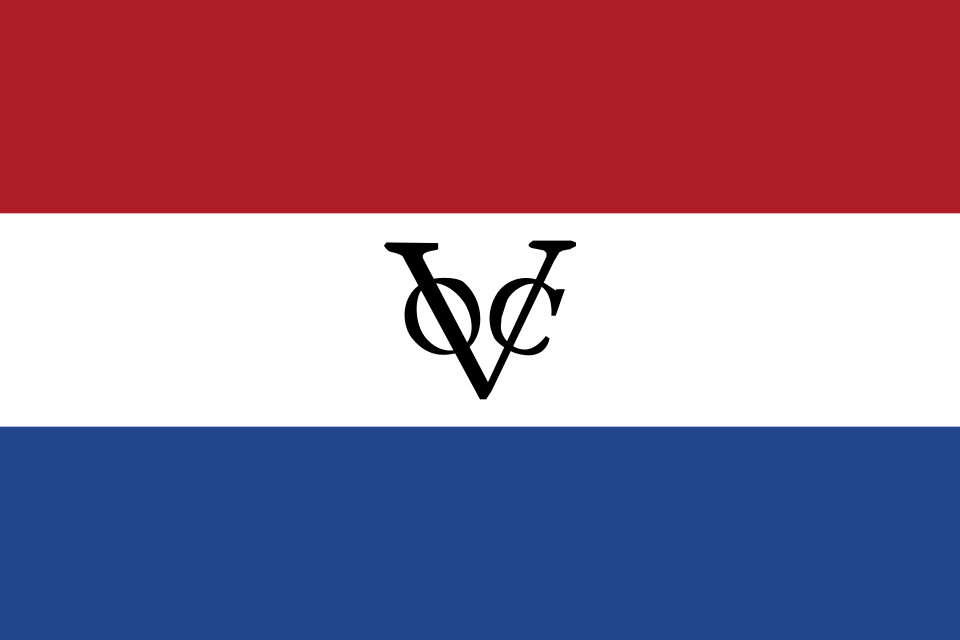
On 6 April 1652, Jan van Riebeeck landed at Table Bay with a Dutch East India Company (VOC) expedition and established the Cape of Good Hope refreshment station. It supplied water, meat and produce to ships travelling between Europe and Asia; it also became the institutional base for settler colonialism in South Africa.
The Cape was not empty. Khoikhoi pastoralists and San hunter-gatherers inhabited the region, while African societies farther east maintained independent political economies. Within 6 years, the VOC imported enslaved people, released company servants as settler-farmers and fought the first Dutch–Khoikhoi war. The station became a colony through land seizure, forced dependence and racialized unfree labor.
Key takeaways
- The VOC founded its Cape of Good Hope station under Jan van Riebeeck on 6 April 1652 to supply ships trading with Asia.
- Khoikhoi and San communities inhabited and used the Cape long before Europeans converted customary landscapes into surveyed settler property.
- The release of 9 free-burgher men in 1657 and major slave imports in 1658 transformed a waystation into a settler colony.
- The First Dutch–Khoikhoi War of 1659–1660 confirmed that colonial farming depended on armed land seizure, not peaceful occupation alone.
- VOC rule lasted from 1652 to 1795 and established institutions of racialized labor, slavery and territorial expansion with long afterlives.
Before 1652: a strategic coast and an inhabited land
For centuries before 1652, Khoikhoi communities moved livestock seasonally across the southwestern Cape; San communities hunted and gathered throughout the wider region. Their decentralized political structures did not mean that land was vacant or unowned. Pasture, water, cattle and access routes were governed through kinship, customary use and negotiated authority.
Portuguese mariners entered the Cape’s written European record in 1488, when Bartolomeu Dias rounded southern Africa. In 1510, a Khoikhoi force killed Portuguese viceroy Francisco de Almeida and about 50 members of his party at Salt River after a dispute involving livestock. English and Dutch ships subsequently used Table Bay without founding a permanent settlement.
The VOC, chartered by the Dutch States General in 1602, held monopoly and war-making powers across a vast commercial zone. After the Dutch ship Nieuw Haarlem wrecked at Table Bay in 1647, survivors stayed for nearly 1 year. Two of them, Leendert Jansz and Matthijs Proot, submitted their 1649 Remonstrantie, arguing that a station could provide produce, treat sick sailors and trade with Khoikhoi cattle owners.
The 1652 settlement was not the beginning of Cape history; it was the beginning of permanent VOC occupation and its documentary bureaucracy.
See the wider South African history hub and chronology of colonial expansion.
What happened in 1652
Van Riebeeck left Texel on 24 December 1651 with 5 ships: the Drommedaris, Reijger, Goede Hoop, Walvisch and Oliphant. The first 3 reached Table Bay on 6–7 April 1652; the other 2 arrived later. His orders were to build a fort, cultivate food, obtain livestock through trade and operate economically—not formally conquer the interior.
“This day, praise be to God, the three ships… arrived safely in Table Bay.” — Jan van Riebeeck, 6 April 1652, Journal of Jan van Riebeeck (translated editions vary in wording).
The settlers erected Fort de Goede Hoop, planted gardens and attempted cattle trade. Relations with local Khoikhoi—whom Dutch records reduced to labels such as “Goringhaicona” and “Goringhaiqua”—combined bargaining, mistrust and coercion. Autshumao, leader of the Goringhaicona and known to Europeans as “Herry,” had worked as an interpreter and commercial intermediary before the VOC settlement.
Van Riebeeck’s journal recorded 116 people at the station on 6 June 1652; by 1 January 1653, disease and hardship had reduced the company community to 60 people. These figures count the VOC settlement, not the surrounding Indigenous population.
| Date | Event | Consequence |
|---|---|---|
| 1488 | Bartolomeu Dias rounds the Cape | The sea route enters sustained Portuguese imperial navigation. |
| 1 March 1510 | Khoikhoi fighters defeat Francisco de Almeida’s party | About 50 Portuguese, including Almeida, are killed. |
| 1602 | The VOC receives its charter | A corporation gains monopoly, treaty and military powers. |
| 1647 | The Nieuw Haarlem is wrecked | Its survivors assess Table Bay as a supply base. |
| 1649 | Jansz and Proot submit the Remonstrantie | VOC directors receive a practical colonization proposal. |
| 24 December 1651 | Van Riebeeck’s expedition leaves Texel | The permanent occupation mission begins. |
| 6 April 1652 | Van Riebeeck reaches Table Bay | The VOC station is founded. |
| 1657 | The VOC grants land to 9 free burghers | Private settler farming and territorial expansion begin. |
| 1658 | Two major slave shipments reach the Cape | Enslaved labor becomes structurally embedded. |
| 1659–1660 | First Dutch–Khoikhoi War | The VOC fortifies its land claims and restricts Khoikhoi movement. |
| 1666–1679 | The stone Castle of Good Hope is built | Permanent military government replaces the first earthen fort. |
The numbers: settlers, slavery and land
The settlement’s scale was initially small, but its institutions proved durable. In 1657, the VOC released 9 male servants as “free burghers” and allotted farms along the Liesbeek River. The grants converted land used by Khoikhoi pastoralists into surveyed settler property. By 1662, when Van Riebeeck departed, the Cape contained about 134 company officials, 35 free burghers, 15 women, 22 children and 180 enslaved people, according to figures commonly compiled from VOC records; categories and totals vary by archival date.
In 1658, the Amersfoort brought 174 surviving enslaved captives from a Portuguese vessel seized off West Africa; VOC records indicate that 250 had initially been taken aboard, with mortality and transfers accounting for the difference. Later in 1658, the Hasselt landed 228 captives acquired around the Bight of Benin. Enslaved people were subsequently transported from Madagascar, Mozambique, East Africa, India, Ceylon and the Indonesian archipelago.
These are administrative snapshots, not a complete demographic account. No reliable census counted all Khoikhoi or San people around Table Bay in 1652. Claims that attach a precise Indigenous population to that year exceed the surviving evidence.
What the station set in motion
The VOC intended a defensible maritime depot, but agriculture required land and labor. The 1657 free-burgher scheme created a settler constituency whose farms pressed beyond company boundaries. During the 1659–1660 First Dutch–Khoikhoi War, Doman led resistance to occupation along the Liesbeek. The VOC retained the disputed farms, erected watch posts and used hedges, patrols and penalties to separate settlers’ livestock and property from Khoikhoi movement.
Successive epidemics, especially smallpox in 1713, 1755 and 1767, caused catastrophic Khoikhoi mortality. Exact colony-wide death totals are unavailable; historian Robert Ross and other Cape scholars describe the 1713 epidemic as killing a very large proportion of the southwestern Cape Khoikhoi population, while warning that records do not support a secure percentage. Survivors entered colonial farms as servants, moved beyond the frontier or joined other communities.
Slavery made expansion profitable and helped produce the Cape’s racial order. The VOC governed until 1795; the Batavian Republic recovered the colony in 1803; Britain seized it again in 1806. British abolition formally ended slavery at the Cape on 1 December 1834, but imposed a 4-year “apprenticeship” that kept formerly enslaved people under former owners until 1 December 1838.
The chain from refreshment station to land regime is central to the archive’s South Africa coverage: 1652 did not predetermine apartheid, introduced nationally in 1948, but it established enduring mechanisms of surveyed ownership, racialized labor control and armed frontier expansion.
How 1652 is remembered
Colonial nationalism long presented 6 April as a civilizational founding. South Africa observed Van Riebeeck’s Day from 1952 and renamed it Founder's Day in 1974; the apartheid government abolished it as a public holiday in 1980. The 1952 tercentenary celebrated Dutch settlement while suppressing the histories of dispossession and enslavement.
In post-apartheid debate, “1652” often functions as shorthand for settler colonialism. That shorthand is useful only if it does not erase precolonial societies, later British conquest, African resistance or the distinct experiences of Khoikhoi, San and enslaved peoples. Van Riebeeck neither created modern South Africa alone nor arrived in an uninhabited country.
The defensible historical claim is narrower and more consequential: permanent European colonial occupation at the Cape began under VOC command in 1652.
Public memory also survives materially in the Castle of Good Hope, land boundaries, archival records and names. Reading those sites critically means identifying who exercised power, whose testimony was preserved and whose losses were converted into company property. Follow the broader colonial timeline for the station’s transformation into an expanding colony.
Sources & further reading
Frequently asked questions
- Why did the Dutch establish the Cape Colony in 1652?
- The Dutch East India Company established the Cape station on 6 April 1652 to supply water, vegetables, meat and medical assistance to ships travelling between Europe and Asia. Jan van Riebeeck was instructed to build a fort and trade for cattle. Agricultural demands soon drove land appropriation, settler farming and the importation of enslaved labor, turning the commercial station into a colony.
- Was the Cape uninhabited when Jan van Riebeeck arrived?
- No. When Jan van Riebeeck arrived in 1652, Khoikhoi pastoralists used the southwestern Cape for seasonal grazing, settlement and trade, while San communities inhabited the wider region. No reliable census provides a complete Indigenous population figure for 1652. The absence of European-style deeds or centralized government did not make the land vacant, ownerless or available for VOC seizure.
- Who founded the Dutch Cape Colony?
- The Dutch East India Company, or VOC, founded the Cape of Good Hope station under commander Jan van Riebeeck. Three ships in his 5-vessel expedition reached Table Bay on 6–7 April 1652. The VOC governed the Cape until 1795, exercising corporate military, judicial and administrative authority granted by its 1602 charter from the Dutch States General.
- When did slavery begin at the Cape?
- Unfree labor existed from the settlement’s beginning, but large VOC slave shipments arrived in 1658. The *Amersfoort* landed 174 surviving captives taken from a Portuguese vessel, and the *Hasselt* landed 228 captives acquired around the Bight of Benin. By 1662, VOC-derived summaries record about 180 enslaved people at the Cape. Slavery remained legal until 1 December 1834.
- How did the 1652 settlement affect the Khoikhoi?
- The settlement disrupted Khoikhoi access to pasture, water and trade. In 1657, the VOC granted farms to 9 free-burgher men along the Liesbeek River. Doman led Khoikhoi resistance in the First Dutch–Khoikhoi War of 1659–1660, but the VOC retained the farms and fortified its claims. Later warfare, labor coercion and epidemics, including smallpox in 1713, accelerated dispossession and social collapse.
Related chapters
Years
- 1492 and the Opening of the Atlantic World
- 1519–1521: The Spanish Conquest of the Aztec Empire
- 1757: Plassey and the East India Company’s Conquest
- 1791–1804: The Haitian Revolution
- 1833–1838: British abolition and slave-owner compensation
- 1857: The Indian Rebellion against Company Rule
- 1884–1885: Berlin Conference and Africa’s Partition
- 1904–1908: The Herero and Nama Genocide
- 1919: Amritsar and the Year the Empire Showed Its Face
Sources & further reading
CC BY 4.0 ·