1919: Amritsar and the Year the Empire Showed Its Face
How the 1919 Amritsar massacre exposed British rule in India: Rowlatt repression, disputed death tolls, imperial impunity and nationalist revolt.
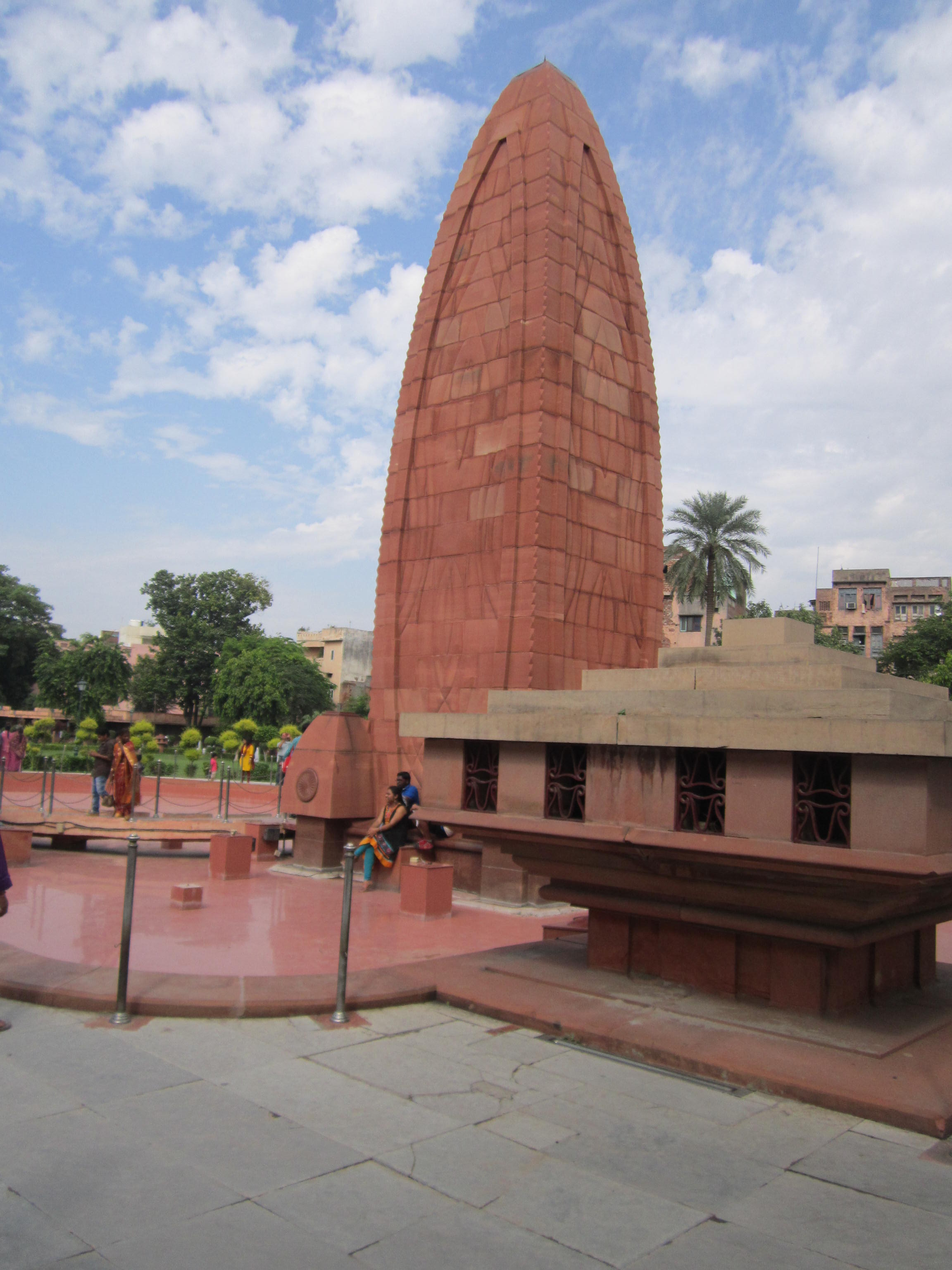
On 13 April 1919, troops under Brigadier-General Reginald Dyer fired without warning into an unarmed crowd trapped inside Jallianwala Bagh, Amritsar. The colonial government’s official 1919 count recorded 379 people killed and about 1,200 wounded; Indian investigators in 1920 estimated more than 1,000 deaths. The massacre was not an isolated lapse. It grew from wartime coercion, racial hierarchy and emergency laws used by the British Raj to suppress political opposition.
Amritsar made imperial violence impossible to dismiss as an abstraction. Dyer ordered the shooting, Lieutenant-Governor Michael O’Dwyer defended it, and Britain ultimately allowed Dyer to retire without criminal prosecution. This hub places the massacre within the wider record of colonial atrocities and the global timeline of resistance and repression.
Key takeaways
- On 13 April 1919, Reginald Dyer ordered 50 riflemen to fire 1,650 rounds into an unarmed crowd without warning.
- The colonial government counted 379 deaths in 1919, while the Indian National Congress estimated more than 1,000 deaths in 1920.
- The massacre followed the March 1919 Rowlatt Act, which preserved wartime detention and exceptional trial powers during peacetime.
- British authorities forced Dyer to retire in 1920 but never prosecuted him, while imperial supporters raised approximately £26,000 in his honor.
- Amritsar accelerated the shift from constitutional petition toward mass anti-colonial mobilization, including Gandhi’s Non-Cooperation Movement of 1920–1922.
Before Amritsar: war, extraction and emergency rule
India entered the First World War in 1914 without consultation. Approximately 1.3 million Indian soldiers and laborers served overseas between 1914 and 1918, according to the Commonwealth War Graves Commission and British Library; official Indian casualty tables published after the war listed 74,187 military deaths for 1914–1918. The colonial state also extracted money, food and recruits while wartime inflation eroded living standards.
Punjab supplied about 360,000 combat recruits during 1914–1918, a figure used by historian Tan Tai Yong, and endured coercive recruitment drives. The 1918–1919 influenza pandemic then killed an estimated 12–13 million people in India, according to demographer Niall Johnson and historian Juergen Mueller’s 2002 reconstruction. Against this devastation, reforms announced under the Government of India Act 1919 left decisive authority with British officials.
The Rowlatt Act, enacted in March 1919, continued wartime powers in peacetime. It permitted detention without trial and special courts without normal appeal safeguards. Mohandas Gandhi called a nationwide hartal for 6 April 1919. In Amritsar, authorities arrested physician Satyapal and barrister Saifuddin Kitchlew on 10 April 1919 and secretly deported them from the city. Protesters demanding their release were fired upon; violence then killed British civilians and Indians, and British institutions were attacked.
“This Act is a strong measure, but its justification is that the disease is very deep-seated.” — Edwin Montagu, Secretary of State for India, parliamentary debate on the Rowlatt legislation, 1919.
The language of disease cast Indian political opposition as pathology and coercion as cure.
What happened in Amritsar
On Baisakhi, 13 April 1919, thousands entered Jallianwala Bagh, an irregular enclosed ground reached through narrow passages. Some attended a political meeting against the Rowlatt Act and the arrests; others were festival visitors unaware that Brigadier-General Reginald Dyer had prohibited public meetings earlier that day.
Dyer arrived with 90 troops, according to his 1919 testimony: 25 Gurkhas armed with rifles, 25 Gurkhas carrying kukris and 40 soldiers from Sikh and Baluchi units. He left 2 armored cars outside because their machine guns could not pass through the narrow entrance. Without ordering the crowd to disperse, he deployed 50 riflemen and commanded them to fire. The troops discharged 1,650 rounds over approximately 10 minutes in 1919, figures Dyer gave to the Disorders Inquiry Committee, commonly called the Hunter Committee. He directed fire toward the densest parts of the crowd and escape points.
“I thought I would be doing a jolly lot of good and they would realise that they were not to be wicked.” — Reginald Dyer, evidence to the Hunter Committee, 1919.
Dyer withdrew without arranging medical assistance. Martial law, formally imposed in parts of Punjab on 15 April 1919, brought public floggings, aerial bombing around Gujranwala and the Amritsar “crawling order,” which forced Indians to move on their bellies along a street where missionary Marcella Sherwood had been assaulted on 10 April 1919.
| Date | Event | Consequence |
|---|---|---|
| 18 March 1919 | Imperial Legislative Council passes the Rowlatt bills | Emergency powers survive the 1918 armistice |
| 21 March 1919 | Rowlatt Act receives assent | Detention and exceptional trials provoke national opposition |
| 6 April 1919 | Gandhi’s all-India hartal takes place | Strikes and demonstrations challenge colonial authority |
| 10 April 1919 | Satyapal and Saifuddin Kitchlew are arrested in Amritsar | Protests, police firing and lethal urban violence follow |
| 13 April 1919 | Baisakhi crowd gathers at Jallianwala Bagh | Dyer blocks the principal exit with troops |
| 13 April 1919 | Fifty riflemen fire 1,650 rounds for about 10 minutes | Hundreds are killed and roughly 1,200 wounded officially |
| 15 April 1919 | Martial law begins in several Punjab districts | Fl******oggings, humiliations and military tribunals intensify repression |
| 14 October 1919 | Hunter Committee is appointed | British and Indian members investigate the Punjab disorders |
| 8 March 1920 | Hunter Committee reports are signed | Majority condemns Dyer but recommends no criminal trial |
| 8 July 1920 | House of Commons debates Dyer | Commons censures him; imperial defenders continue to celebrate him |
| 13 March 1940 | Udham Singh kills Michael O’Dwyer in London | The Punjab repression returns to international attention |
The numbers and the struggle over evidence
The Government of Punjab’s official inquiry reported 379 deaths in 1919: 337 men, 41 boys and one six-week-old infant. It listed roughly 1,200 wounded in 1919. The Indian National Congress inquiry, reporting in 1920 under leaders including Gandhi, estimated more than 1,000 killed and about 1,500 wounded. No complete register exists: families feared officials, some victims came from outside Amritsar, and bodies were removed amid curfew and repression.
The official minimum of 379 deaths from 1,650 rounds means at least one recorded death for every 4.35 bullets fired in 1919; deaths plus approximately 1,200 official wounded imply about 1,579 acknowledged casualties. These are not competing measures of the same quality. The lower figure came from the state responsible for the killings; the higher estimate emerged from Indian testimony collected under intimidation and incomplete documentation.
Numbers also expose intent. Dyer told the 1919 inquiry that he could have dispersed the meeting without firing but believed doing so would make him “a fool.” He said his purpose extended beyond the people present: he intended to produce a “moral effect” throughout Punjab. In plain terms, the shooting was exemplary terror.
What 1919 set in motion
The Hunter Committee’s British majority concluded in 1920 that Dyer had committed a “grave error” by firing without warning and continuing too long. Its Indian minority issued a sharper condemnation. Dyer was removed from command and compelled to retire in 1920, but he was never prosecuted. The conservative newspaper Morning Post raised approximately £26,000 for him in 1920—equivalent to decades of a senior officer’s pay—while the House of Lords defended him. The House of Commons censured him on 8 July 1920.
Rabindranath Tagore renounced his 1915 knighthood in a letter dated 30 May 1919, writing that “the badges of honour make our shame glaring.” Gandhi returned his 1900 Kaiser-i-Hind medal in 1920 and made Punjab wrongs central to the Non-Cooperation Movement of 1920–1922. Jawaharlal Nehru later described Amritsar as a decisive revelation of racialized imperial power.
The massacre did not single-handedly create Indian nationalism, which had organized for decades before 1919. It destroyed faith among many constitutional moderates that British rule would reform itself through moral appeal. Read alongside other archive atrocities, Amritsar demonstrates how emergency law, collective punishment and official impunity functioned together. Its place on the archive timeline is therefore political as well as chronological.
On 13 March 1940, Udham Singh shot Michael O’Dwyer at Caxton Hall in London. Singh was convicted and hanged on 31 July 1940. He said the killing answered the suffering of Punjab; O’Dwyer, rather than Dyer, had been the province’s chief civilian authority in 1919.
Memory, apology and unresolved accountability
Jallianwala Bagh became a national memorial under an Indian law enacted in 1951; President Rajendra Prasad inaugurated the memorial on 13 April 1961, the massacre’s 42nd anniversary. Its walls retain bullet marks, and the well into which people jumped while fleeing remains central to public memory.
British monarch Elizabeth II visited in 1997 and called the massacre a “distressing example” of past history, but did not apologize. Prime Minister David Cameron visited in 2013, described it as “deeply shameful” and likewise stopped short of an apology. On 10 April 2019, three days before the centenary, Prime Minister Theresa May expressed “deep regret” in Parliament. None of those statements created legal accountability or reparations.
Commemoration remains contested because renovated heritage can turn state killing into spectacle. The central historical facts are firmer than the exact toll: troops fired without warning into a confined civilian gathering on 13 April 1919; colonial officers intended collective intimidation; and imperial institutions denied a criminal trial. The continuing dispute over language—tragedy, massacre, crime or atrocity—concerns responsibility, not merely remembrance.
Sources & further reading
- UK Parliament: Amritsar and the Punjab Disturbances, House of Commons debate, 8 July 1920
- British Library: Voices of the First World War—India and the Western Front
- Encyclopaedia Britannica: Massacre of Amritsar
- UK Parliament: Prime Minister’s statement on Jallianwala Bagh, 10 April 2019
- Manchester University Press: Kim A. Wagner, Amritsar 1919
Frequently asked questions
- What happened at Jallianwala Bagh on 13 April 1919?
- Brigadier-General Reginald Dyer entered the enclosed Jallianwala Bagh in Amritsar with 90 troops and deployed 50 riflemen. Without warning the crowd to disperse, he ordered approximately 10 minutes of firing. The soldiers used 1,650 rounds. The Punjab government recorded 379 dead and roughly 1,200 wounded in 1919; the Indian National Congress estimated more than 1,000 dead in 1920.
- Why had the crowd gathered at Jallianwala Bagh?
- Thousands gathered on 13 April 1919 during the Baisakhi festival. Some attended a meeting opposing the Rowlatt Act of March 1919 and demanding the release of Satyapal and Saifuddin Kitchlew, arrested on 10 April 1919. Others were festival visitors and may not have known that Reginald Dyer had announced a ban on meetings. The gathering was unarmed and included men, women and children.
- How many people died in the Amritsar massacre?
- The Government of Punjab’s official 1919 inquiry counted 379 dead, including 41 boys and one infant, and approximately 1,200 wounded. The Indian National Congress inquiry reported in 1920 that more than 1,000 people were killed and about 1,500 wounded. The true total remains uncertain because documentation was incomplete, outsiders attended the Baisakhi gathering, and colonial curfews and intimidation obstructed reporting.
- Was Reginald Dyer punished for the Jallianwala Bagh massacre?
- Reginald Dyer was removed from command and forced to retire in 1920 after the Hunter Committee found that he had exceeded his authority. He faced no criminal prosecution. The House of Commons censured him on 8 July 1920, but the House of Lords and sections of the British press defended him. The *Morning Post* raised approximately £26,000 for Dyer in 1920.
- Did Britain apologize for the Amritsar massacre?
- No British government has issued a formal state apology. Queen Elizabeth II called the massacre a “distressing example” during her 1997 visit. Prime Minister David Cameron described it as “deeply shameful” in 2013. On 10 April 2019, Prime Minister Theresa May expressed “deep regret” before the 100th anniversary, but none of these statements accepted legal liability, offered reparations or constituted a formal apology.
Related chapters
Years
- 1492 and the Opening of the Atlantic World
- 1519–1521: The Spanish Conquest of the Aztec Empire
- 1652: The Founding of the Dutch Cape Colony
- 1757: Plassey and the East India Company’s Conquest
- 1791–1804: The Haitian Revolution
- 1833–1838: British abolition and slave-owner compensation
- 1857: The Indian Rebellion against Company Rule
- 1884–1885: Berlin Conference and Africa’s Partition
- 1904–1908: The Herero and Nama Genocide
Sources & further reading
CC BY 4.0 ·