Patrice Lumumba: Independence, Overthrow and Assassination
Patrice Lumumba led independent Congo’s first government before Belgian-backed rivals killed him in 1961 amid Cold War intervention and secession.
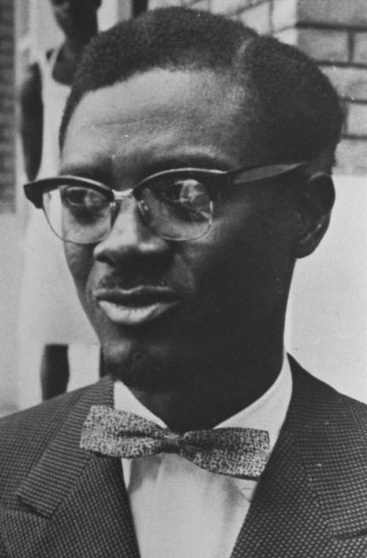
Patrice Émery Lumumba (1925–1961) was a Congolese nationalist, pan-Africanist and the first prime minister of the independent Republic of the Congo, overthrown in 1960 and assassinated in 1961.
Lumumba challenged Belgian control of Congo’s state, army and mineral wealth. His removal emerged from a struggle involving Belgian officials and soldiers, Congolese rivals, Katanga’s secessionist regime and covert US intervention. Belgium later accepted “moral responsibility” for circumstances leading to his death; a Belgian court has continued examining alleged war crimes connected to the killing.
Key takeaways
- Patrice Lumumba led Congo’s first independent government from June to September 1960 and demanded political unity and economic sovereignty.
- Mobutu’s forces captured Lumumba before Congolese and Belgian actors transferred him to Katanga, where he was executed on 17 January 1961.
- The CIA planned possible assassination methods in 1960, although the 1975 Church Committee found no proof it carried out the killing.
- Belgium acknowledged moral responsibility in 2001, apologized in 2002 and returned Lumumba’s only known physical remnant in 2022.
- Lumumba’s removal helped protect foreign strategic and mining interests while opening the path to Mobutu’s 31-year dictatorship.
Who Patrice Lumumba was
Born on 2 July 1925 at Onalua in Belgian Congo, Lumumba worked as a postal clerk and beer salesman before entering national politics. In 1958 he helped establish the Mouvement National Congolais (MNC), unusual among major Congolese parties for advocating a unified state rather than an ethnic or regional constituency. That year he attended the All-African Peoples’ Conference in Accra.
Belgium’s rule rested on forced labor, racial hierarchy, corporate extraction and near-total political exclusion, documented in the archive’s Belgian Empire hub. At independence on 30 June 1960, the country had only a small cohort of Congolese university graduates—commonly reported as fewer than 30, although definitions and contemporary counts vary—and no Congolese commissioned officers in the Force Publique.
“We are no longer your monkeys.” — Patrice Lumumba, letter to his wife Pauline, 1960, published posthumously as his final letter.
His nationalism was not a program to expel Europeans indiscriminately. It sought political sovereignty, territorial unity and Congolese authority over resources: principles that threatened colonial interests and later systems of neocolonial rule.
Election, office and the mechanisms of his removal
The MNC-Lumumba won 33 of 137 elected Chamber seats in the May 1960 election, the largest single bloc, according to official electoral returns summarized by historians including Crawford Young. Parliament formed a coalition: Lumumba became prime minister and Joseph Kasa-Vubu president.
Days after independence, the Force Publique mutinied. Belgium deployed troops without the central government’s consent, while mineral-rich Katanga declared secession under Moïse Tshombe on 11 July 1960. Belgian officers, advisers and companies sustained the breakaway administration. South Kasai followed on 8 August 1960. The UN deployed peacekeepers but refused Lumumba’s demand that they suppress Katanga, leading him to seek Soviet aircraft and logistical support.
President Kasa-Vubu announced Lumumba’s dismissal on 5 September 1960; Lumumba rejected it, and parliament supported him. Colonel Joseph-Désiré Mobutu then announced a coup on 14 September, backed by Western money and political support. CIA Director Allen Dulles had approved a covert program against Lumumba on 26 August 1960. A lethal substance was sent to CIA station chief Lawrence Devlin, but no evidence shows that this poison was used.
Documented record and chronology
Lumumba escaped house arrest on 27 November 1960 but Mobutu’s forces captured him near Port-Francqui on 1 December. On 17 January 1961 he and allies Maurice Mpolo and Joseph Okito were flown to Katanga, tortured, and shot that evening by a firing squad under Katangese authority, with Belgian officers present. Belgian commissioner Gerard Soete later described cutting up the corpses and dissolving them in sulfuric acid.
| Date | Event |
|---|---|
| 2 July 1925 | Lumumba is born at Onalua. |
| 5 October 1958 | The MNC is founded in Léopoldville. |
| May 1960 | MNC-Lumumba wins 33 of 137 elected Chamber seats. |
| 30 June 1960 | Congo becomes independent; Lumumba delivers his anti-colonial speech. |
| 11 July 1960 | Katanga declares secession. |
| 14 September 1960 | Mobutu announces his first coup. |
| 1 December 1960 | Mobutu’s troops capture Lumumba. |
| 17 January 1961 | Lumumba, Mpolo and Okito are executed in Katanga. |
| 5 February 2002 | Belgium formally apologizes for its role. |
| 20 June 2022 | Belgium returns Lumumba’s remaining tooth to his family. |
The wider Congo Crisis produced no universally accepted death total. Political scientist René Lemarchand estimated that fighting in South Kasai killed about 3,000 people from August to September 1960; contemporary refugee estimates reached roughly 200,000 displaced Baluba by late 1960. Dag Hammarskjöld reported famine conditions threatening tens of thousands. These figures describe distinct harms and should not be combined as one death toll.
The defense offered by Belgium, the United States and Lumumba’s rivals
Belgian officials portrayed intervention as protection for Belgian civilians after the army mutiny and represented Katanga’s secession as local self-determination. US policymakers described Lumumba as unstable and vulnerable to Soviet control. Mobutu claimed his 14 September 1960 “neutralization” of politicians would prevent civil war and Cold War domination. Katangese leaders maintained that they were defending provincial autonomy and mineral revenues against Léopoldville.
The 1975 US Senate Church Committee found that the CIA had considered and prepared means to assassinate Lumumba, but that available evidence did not establish CIA participation in his eventual killing.
Those defenses omit decisive context. Belgium had left its former colony without an Africanized officer corps, intervened militarily, and supported Katanga. Lumumba requested Soviet assistance only after Belgium’s intervention and the UN’s refusal to use force against secession. The Belgian parliamentary inquiry reported in 2001 that certain Belgian ministers and officials bore “moral responsibility” for circumstances leading to the assassination. In 2002, Foreign Minister Louis Michel apologized on Belgium’s behalf. That admission did not erase Congolese agency, but it ended any credible claim that Belgium was a neutral spectator.
Afterlife, investigation and memory today
Lumumba became an international symbol of African sovereignty and resistance to neocolonial extraction. His killing also cleared the political field for Mobutu, who seized power permanently on 24 November 1965 and ruled Zaire until 17 May 1997—more than 31 years—while receiving extensive Western support.
Belgium’s 2001 inquiry reconstructed the transfer and execution but stopped short of finding a Belgian government order to kill Lumumba. In 2011, Lumumba’s family filed a criminal complaint in Belgium. In 2012, a Brussels court allowed investigation of alleged war crimes because such crimes carry no limitation period under Belgian law. Prosecutors announced in June 2025 that former diplomat Étienne Davignon, aged 92 that year, was among the surviving suspects they wanted tried; judicial proceedings determine guilt.
Belgium returned a gold-capped tooth, seized by Soete, to Lumumba’s family on 20 June 2022. It is the only known physical remnant of his body. Streets, universities and monuments carry his name, but commemoration can obscure the material issue at the center of his politics: whether Congo’s government or foreign states and corporations would control its territory and mineral wealth.
Lumumba’s legacy therefore belongs not only to Cold War history but to the continuing history of the Belgian Empire and modern neocolonies. Memory without accountability risks converting a destroyed political project into a harmless icon.
Sources & further reading
- Belgian Parliamentary Commission report on Lumumba (2001)
- US Senate Church Committee, Alleged Assassination Plots Involving Foreign Leaders (1975)
- Ludo De Witte, The Assassination of Lumumba
- Georges Nzongola-Ntalaja, The Congo from Leopold to Kabila
- Encyclopaedia Britannica: Patrice Lumumba
- BBC News: Belgium returns Patrice Lumumba’s tooth
Frequently asked questions
- Who was Patrice Lumumba?
- Patrice Lumumba was a Congolese nationalist and pan-Africanist born on 2 July 1925. His MNC-Lumumba party won 33 of 137 elected Chamber seats in May 1960, and he became independent Congo’s first prime minister on 30 June 1960. After a political and military struggle involving Belgium, Katanga, Mobutu and the United States, he was assassinated on 17 January 1961.
- Who killed Patrice Lumumba?
- Lumumba, Maurice Mpolo and Joseph Okito were shot in Katanga on 17 January 1961. Katangese officials directed and participated in the execution, while Belgian officers assisted its organization and later destroyed the bodies. Mobutu’s forces had captured Lumumba and the central government transferred him. US officials sought his removal and the CIA planned assassination options, but the 1975 Church Committee found no proof that the CIA carried out the eventual killing.
- Why did Belgium oppose Patrice Lumumba?
- Lumumba demanded a unified, sovereign Congo with control over its state and resources. After independence on 30 June 1960, Belgium intervened militarily and supported mineral-rich Katanga’s secession. A Belgian parliamentary inquiry concluded in 2001 that certain Belgian ministers and officials bore moral responsibility for circumstances leading to Lumumba’s death; Belgium formally apologized on 5 February 2002.
- Was Patrice Lumumba a communist?
- Lumumba was primarily an African nationalist and pan-Africanist, not a member of a communist party. Western officials labeled him a Soviet threat after he requested Soviet transport and military assistance in 1960. He did so after Belgium intervened and the United Nations declined to use its forces to end Katanga’s secession. Cold War framing helped justify covert US action against him.
- What happened to Patrice Lumumba’s body?
- After the execution on 17 January 1961, Belgian participants exhumed, dismembered and dissolved the bodies of Lumumba, Maurice Mpolo and Joseph Okito in sulfuric acid to conceal the crime. Belgian officer Gerard Soete retained a gold-capped tooth. Belgium returned that tooth—the only known physical remnant—to Lumumba’s family in Brussels on 20 June 2022.
Related chapters
People & institutions
- Jallianwala Bagh massacre: Amritsar, 1919
- Cecil Rhodes: Empire, Mining and Colonial Rule
- Christopher Columbus: Voyages, Enslavement and Colonial Rule
- Elmina Castle: Gold, Slavery and Colonial Power
- Frantz Fanon: Psychiatrist of Colonial Violence
- Hernán Cortés: Conquest, Colonial Rule and Legacy
- Force Publique: Leopold II’s Colonial Army in Congo
- Kwame Nkrumah: Independence, Pan-Africanism and Power
- Leopold II of Belgium: Rule, Atrocities and Legacy
Sources & further reading
CC BY 4.0 ·