Commonwealth of Nations: Empire, Power and Legacy
The Commonwealth of Nations explained: its imperial origins, institutions, membership, documented failures, defenses and neocolonial legacy today.
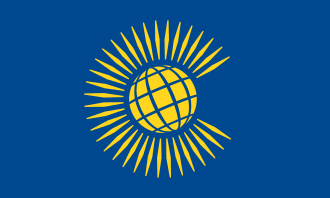
The Commonwealth of Nations was an imperial successor association founded in its modern form in 1949 and comprising 56 sovereign states in 2026, most formerly governed by the British Empire.
It presents itself as a voluntary partnership committed to democracy, development and peace. Yet its shared language, law, trade networks and monarchy arose from conquest, enslavement, extraction and settler colonialism. The Commonwealth neither governs members nor replaces empire; it organizes relations among states left radically unequal by empire.
Key takeaways
- The modern Commonwealth began with the 1949 London Declaration and had 56 sovereign member states in 2026.
- Most members inherited borders, institutions and economic dependencies created under British imperial rule rather than through equal partnership.
- The Commonwealth uses consensus, diplomacy, observation and suspension, but possesses no binding authority comparable to a state or court.
- Its opposition to apartheid mattered, yet inconsistent enforcement and resistance to reparations expose the limits of its declared principles.
- Reparatory justice, republicanism and demands to decolonize finance now shape arguments over the Commonwealth’s legitimacy and future.
What the Commonwealth is
The 1926 Balfour Declaration described Britain and its self-governing dominions as equal communities within the British Empire. The Statute of Westminster gave that formula legal force for participating dominions in 1931. The 1949 London Declaration then allowed republican India to remain, establishing the modern Commonwealth and recognizing King George VI as the symbolic “Head of the Commonwealth.”
Its central bodies are the Commonwealth Secretariat, created in 1965 to coordinate governments, and the Commonwealth Foundation, created in 1966 to support civil society. The Commonwealth had 56 members in 2026; Gabon and Togo, admitted in 2022, were never British colonies. King Charles III has held the nonhereditary headship since 2022, while the secretary-general runs the Secretariat.
| Date | Event |
|---|---|
| 1926 | The Balfour Declaration defines Britain and the dominions as autonomous and equal in status. |
| 1931 | The Statute of Westminster establishes legislative autonomy for participating dominions. |
| 1949 | The London Declaration permits republican India to remain and marks the modern Commonwealth. |
| 1965 | Member governments create the Commonwealth Secretariat; Arnold Smith becomes its first secretary-general. |
| 1971 | The Singapore Declaration sets out principles including racial equality and opposition to colonial domination. |
| 1991 | The Harare Declaration reaffirms democracy, human rights and the rule of law. |
| 1995 | Nigeria is suspended after General Sani Abacha’s regime executes Ken Saro-Wiwa and 8 other Ogoni activists. |
| 2022 | Gabon and Togo join, raising membership from 54 to 56 states. |
How power operates
The Commonwealth acts through diplomacy, elite networks, technical programs, election observation and reputational pressure rather than binding supranational law. Decisions are normally reached by consensus at meetings of heads of government. The Commonwealth Ministerial Action Group, established in 1995, can recommend suspension for serious violations of declared principles.
Material power remains uneven. English, common-law systems, Westminster institutions, imperial borders and London-centered finance connect many members, but those inheritances do not distribute wealth equally. Preferential imperial trade largely disappeared after Britain joined the European Economic Community in 1973. Contemporary trade is commercial, not a shared redistributive system.
The monarch’s position carries symbolic weight without constitutional command over the association. In 2026, Charles III was separately sovereign of the United Kingdom and 14 other Commonwealth realms, making 15 realms in total; each crown is legally distinct. Most members were republics.
“The Commonwealth bears no resemblance to the Empires of the past. It is an entirely new conception.” — Jawaharlal Nehru, 1949, statement to India’s Constituent Assembly on the London settlement.
The documented record: scale, intervention and failure
The association inherited an empire that governed roughly one-quarter of the world’s land and population at its early-20th-century height. Its present size is substantial but not evidence of equal influence. Using 2024 population estimates compiled by the Commonwealth Secretariat, members contained about 2.7 billion people, roughly one-third of humanity; India accounted for more than half.
The Commonwealth contributed to isolating white-minority rule. Its 1977 Gleneagles Agreement committed governments to discourage sporting contact with apartheid South Africa. The Eminent Persons Group’s 1986 mission documented repression and advocated negotiations, while British prime minister Margaret Thatcher resisted comprehensive economic sanctions.
Enforcement has nevertheless been selective. Nigeria’s 1995 suspension followed the execution of 9 Ogoni activists; it returned in 1999 after civilian rule. Zimbabwe withdrew in 2003 while suspended. The Maldives left in 2016 alleging unfair treatment and returned in 2020. Fiji was fully suspended in 2009 after the 2006 coup and readmitted in 2014 after elections.
The organization has not provided a comprehensive institutional accounting of imperial killing or extraction. One example is the 1943 Bengal famine: historian Cormac Ó Gráda’s 2007 synthesis placed excess deaths around 2.1 million, while earlier estimates commonly ranged from 1.5 million to 3 million. Another is Britain’s suppression of Kenya’s Mau Mau rebellion: the British government agreed in 2013 to pay £19.9 million to 5,228 claimants subjected to colonial abuse. These were crimes of the empire whose successor networks the Commonwealth preserved, not acts committed by the Secretariat.
The defense made for it
Supporters argue that a voluntary association can repurpose inherited connections. They cite election monitoring, small-state advocacy, scholarships, professional networks and mediation. The 1991 Harare Declaration and 2013 Commonwealth Charter formalized commitments to democracy, human rights, gender equality and sustainable development.
“We are committed to equality and respect for the protection and promotion of civil, political, economic, social and cultural rights.” — Commonwealth Heads of Government, 2013, Charter of the Commonwealth.
This defense has evidence behind it: suspensions can stigmatize coups, and Commonwealth observers can document electoral defects. It also has limits. Declarations are not enforceable treaties, consensus protects powerful members, and technical cooperation cannot repair wealth transfers produced over centuries. Calling the association a “family” can obscure conflicts between colonizing and colonized states and evade demands for reparations.
Afterlife, reparations and memory today
The Commonwealth remains a diplomatic platform, not a postcolonial settlement. Its endurance shows both the utility of common institutions and the reach of British imperial afterlives. In Caribbean states, republican campaigns challenge the monarchy; Barbados replaced Elizabeth II with a president in 2021 while remaining a member.
Reparations have moved toward the center of Commonwealth politics. The Caribbean Community established its Reparations Commission in 2013 and advanced a 10-point plan in 2014 covering apology, debt cancellation, health, education and development. At the 2024 Commonwealth Heads of Government Meeting in Samoa, leaders’ communiqué acknowledged calls for discussions on reparatory justice for transatlantic slavery and the slave trade, despite the British government’s resistance to monetary reparations.
The core dispute is therefore not whether members cooperate, but whether cooperation confronts the balance sheet of empire. Memory limited to ceremonies and shared language reproduces hierarchy. Serious reckoning requires opened archives, restitution of stolen objects, institutional apologies, debt and trade reform, and negotiated material repair. These questions connect the Commonwealth directly to modern neocolonies, where formal sovereignty coexists with unequal finance, commodity dependence and external corporate power.
Sources & further reading
Frequently asked questions
- When was the Commonwealth of Nations founded?
- The modern Commonwealth dates to the London Declaration of 28 April 1949, which allowed republican India to remain while accepting King George VI as the association’s symbolic head. Its institutional ancestry includes the 1926 Balfour Declaration and the 1931 Statute of Westminster. The Commonwealth Secretariat was created later, in 1965.
- How many countries belong to the Commonwealth?
- The Commonwealth had 56 member states in 2026. Membership rose from 54 to 56 when Gabon and Togo joined in 2022; neither had been a British colony. Most members are former territories of the British Empire, and their combined population was estimated by the Commonwealth Secretariat at about 2.7 billion in 2024.
- Does Britain control the Commonwealth?
- No. Since the 1949 London Declaration, the Commonwealth has formally consisted of sovereign, equal members, and its decisions normally require consensus. Britain nevertheless retains disproportionate symbolic, financial and diplomatic influence rooted in empire. In 2026, Charles III was head of the Commonwealth and separately monarch of 15 Commonwealth realms, including the United Kingdom.
- What has the Commonwealth done about human rights abuses?
- Its record is mixed. The 1977 Gleneagles Agreement targeted sporting links with apartheid South Africa. Nigeria was suspended in 1995 after Sani Abacha’s regime executed Ken Saro-Wiwa and 8 other Ogoni activists. Fiji was fully suspended in 2009 and readmitted in 2014. Such measures impose stigma, not legally binding punishment.
- Has the Commonwealth supported reparations for slavery and colonialism?
- It has not adopted a binding reparations program. At the 2024 summit in Samoa, leaders acknowledged calls for discussion of reparatory justice concerning transatlantic slavery and the slave trade. CARICOM, whose Reparations Commission was established in 2013, has pressed the issue, while the British government continued in 2024 to reject monetary reparations.
Related chapters
People & institutions
- Jallianwala Bagh massacre: Amritsar, 1919
- Cecil Rhodes: Empire, Mining and Colonial Rule
- Christopher Columbus: Voyages, Enslavement and Colonial Rule
- Elmina Castle: Gold, Slavery and Colonial Power
- Frantz Fanon: Psychiatrist of Colonial Violence
- Hernán Cortés: Conquest, Colonial Rule and Legacy
- Force Publique: Leopold II’s Colonial Army in Congo
- Kwame Nkrumah: Independence, Pan-Africanism and Power
- Leopold II of Belgium: Rule, Atrocities and Legacy
Sources & further reading
CC BY 4.0 ·