1948: The Nakba and Apartheid South Africa
How 1948 brought Palestinian mass dispossession and formal apartheid in South Africa, with a chronology, documented figures, laws and legacies.
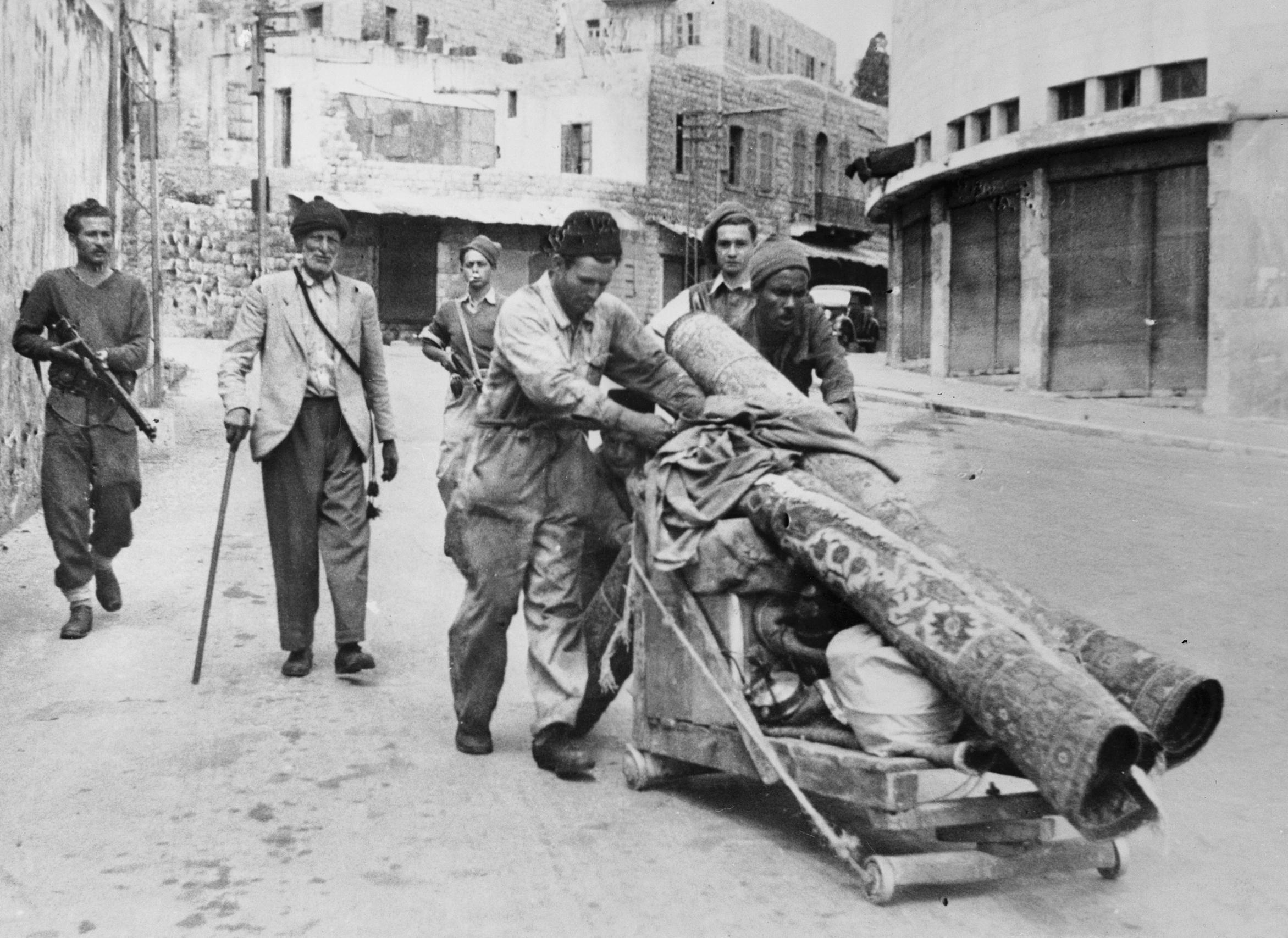
In 1948, two settler-colonial projects crossed decisive thresholds. In Palestine, Zionist forces and then Israel expelled or drove from their homes about 750,000 Palestinians during the 1947–49 war, according to the United Nations; more than 400 Palestinian localities were depopulated or destroyed. In South Africa, the National Party won the whites-only election of 26 May 1948 and converted established racial domination into the statutory system called apartheid.
The histories were distinct, not interchangeable: the Nakba unfolded through war, expulsion, dispossession and prevention of return, while South African apartheid consolidated minority rule through legislation and administration. Together, they show how states made demographic control durable through armed force, property seizure, racial classification and law. See the archive’s wider chronology and documentation of colonial atrocities.
Key takeaways
- In 1948, about 750,000 Palestinians were displaced while Israel was established and subsequently prevented most refugees from returning.
- More than 400 Palestinian localities were depopulated or destroyed during the 1947–49 war, with Walid Khalidi documenting 418 villages.
- South Africa’s National Party gained power on 26 May 1948 through a whites-only electorate representing a small minority of the population.
- Apartheid formalized older colonial segregation through racial classification, territorial separation, labor control and forced removal legislation.
- The Nakba and apartheid were distinct histories connected by settler rule, demographic control, dispossession and racialized systems of law.
Before 1948: colonial rule and organized dispossession
Britain governed Palestine under a League of Nations mandate from 1922, incorporating its 1917 commitment to a “Jewish national home” without granting the Arab majority equivalent national rights. British statistics recorded 1,845,560 inhabitants at the end of 1946: 1,203,000 Muslims, 608,230 Jews and 34,330 Christians and others. By 1947, Palestinian Arabs remained roughly two-thirds of the population, while Jewish ownership covered about 6–7% of the land, according to British and UN-era land statistics.
On 29 November 1947, UN General Assembly Resolution 181 recommended partition. Its proposed Jewish state received about 56% of Mandatory Palestine although Jews comprised about one-third of the population in 1947. The proposal was never implemented through an agreed transfer of sovereignty; civil war began immediately.
South Africa entered 1948 after centuries of Dutch and British conquest, African land seizure, slavery and segregation. The 1913 Natives Land Act restricted African landholding to scheduled areas covering about 7% of the country; the 1936 Native Trust and Land Act nominally raised that allocation to about 13%, although acquisition remained incomplete. Black South Africans—roughly 80% of the population in 1946 census classifications—were excluded from the national electorate outside the steadily dismantled Cape qualified franchise.
“The native should only be allowed to enter the urban areas, which are essentially the white man’s creation, when he is willing to enter and to minister to the needs of the white man.” — Hendrik Verwoerd, South African Senate speech, 1953
What happened in 1948
From December 1947, Haganah, Irgun and Lehi operations emptied Palestinian communities amid combat, expulsions and fear intensified by massacres. On 9 April 1948, Irgun and Lehi fighters killed about 100–110 residents of Deir Yassin; historian Benny Morris gives roughly 100–120, while contemporary claims of 254 were later revised downward. Plan Dalet, adopted by the Haganah in March 1948, authorized occupation of strategic areas and, where resistance occurred, destruction of villages and expulsion of inhabitants.
“We appeal—in the very midst of the onslaught launched against us now for months—to the Arab inhabitants of the State of Israel to preserve peace.” — David Ben-Gurion and the Provisional State Council, Declaration of the Establishment of the State of Israel, 1948
That promise coexisted with expulsions already under way and the later refusal to permit mass return. Israel declared independence on 14 May 1948. Neighboring Arab armies entered on 15 May; the interstate war followed more than five months of civil war and the displacement of an estimated 250,000–300,000 Palestinians by that date, according to historians including Morris.
In South Africa, D. F. Malan’s National Party won 70 of 150 parliamentary seats on 26 May 1948, despite receiving about 37.7% of votes against the United Party’s roughly 49.2%; constituency boundaries and rural weighting delivered power. Only a white electorate of approximately 1 million people participated nationally. Malan took office on 4 June and began constructing apartheid’s legal machinery.
| Date | Event | Consequence |
|---|---|---|
| 29 Nov 1947 | UN Resolution 181 recommends partition | War begins between Palestinian and Zionist forces |
| Dec 1947–Mar 1948 | Coastal and urban expulsions accelerate | Tens of thousands of Palestinians become refugees |
| Mar 1948 | Haganah adopts Plan Dalet | Strategic conquest and village depopulation intensify |
| 9 Apr 1948 | Deir Yassin massacre | About 100–110 people are killed; flight spreads |
| 21–22 Apr 1948 | Haganah captures Haifa | Most of about 70,000 Palestinian Arab residents flee or are expelled |
| 14 May 1948 | Israel declares statehood | Mandatory rule ends and Israeli sovereignty is asserted |
| 15 May 1948 | Arab armies enter Palestine | Civil war becomes an interstate conflict |
| 26 May 1948 | National Party wins South African election | Apartheid becomes official government policy |
| 4 June 1948 | D. F. Malan becomes prime minister | Racial classification and separation legislation follows |
| 11 Dec 1948 | UN Resolution 194 is adopted | Paragraph 11 affirms refugee return or compensation |
The documented numbers
The UN commonly reports that more than 700,000 Palestinians became refugees in 1948; UNRWA’s operational figure was approximately 750,000 by 1950. Scholarly estimates generally range from about 700,000 to 750,000 for 1947–49. Walid Khalidi documented 418 depopulated or destroyed villages in his 1992 study; other researchers using broader locality definitions count more than 500.
Deaths are less certain. Historian Benny Morris estimated about 5,800–5,900 Palestinian Arabs killed in 1947–49, while broader Palestinian and Arab military totals are often placed around 8,000–15,000, depending on inclusion. Israel’s Ministry of Foreign Affairs records 6,373 Israelis killed in the 1947–49 war, including about 4,000 combatants and 2,400 civilians. These categories and periods are not directly comparable.
South Africa’s 1946 census counted approximately 11.4 million people: about 7.8 million Africans, 2.4 million whites, 0.9 million Coloured people and 0.3 million Indians/Asians under the state’s racial categories. Yet the 1948 national election was decided by roughly 1 million registered white voters. That exclusion, rather than an inclusive democratic mandate, founded the apartheid government.
What 1948 set in motion
Israel prevented most refugees from returning despite UN Resolution 194 of 11 December 1948. The 1950 Absentees’ Property Law transferred refugee property to a state custodian; Israeli military rule constrained Palestinian citizens until 1966. UNRWA began operations in 1950 for about 750,000 registered or eligible refugees. By 2023, UNRWA counted nearly 6 million registered Palestine refugees and descendants, a registration figure rather than a count of all displaced Palestinians.
South Africa’s government enacted the Prohibition of Mixed Marriages Act in 1949, Population Registration Act and Group Areas Act in 1950, and Bantu Authorities Act in 1951. These measures classified residents, criminalized intimacy, segregated land and government, and prepared forced removals. From 1960 to 1983, about 3.5 million Black South Africans were forcibly removed under apartheid, according to the Surplus People Project’s 1985 estimate.
Apartheid ended through struggle and negotiation, culminating in South Africa’s first universal-suffrage election on 27 April 1994. The Palestinian refugee question, dispossession and occupation remain unresolved. Explore connected cases in Atrocities and compare turning points on the global timeline.
How 1948 is remembered and contested
Palestinians commemorate Nakba Day on 15 May, carrying keys and deeds symbolizing homes from which families were expelled. Israel marks independence according to the Hebrew calendar. The clash is not merely one of memory: archives, property laws, demolished villages, refugee camps and continuing denial of return connect 1948 to present rights.
South Africa’s 1948 election is remembered as apartheid’s formal inauguration, not the beginning of racial oppression. Apartheid’s architects presented segregation as orderly “separate development”; those subjected to it experienced pass raids, removals, detention, labor exploitation and political disenfranchisement. Nelson Mandela’s presidency in 1994 ended white-minority government, but land and wealth inequalities created under conquest and apartheid survived.
The comparison is strongest when it identifies structures without collapsing histories: settler power, demographic engineering, segregated territory, racialized law and property transfer. It becomes misleading when it erases different wars, institutions, populations and legal regimes.
Sources & further reading
Frequently asked questions
- What happened during the Nakba in 1948?
- During the 1947–49 Palestine war, Zionist forces and then the Israeli military expelled or drove about 700,000–750,000 Palestinians from their homes. More than 400 Palestinian villages and urban communities were depopulated or destroyed. Israel declared independence on 14 May 1948 and subsequently blocked most refugees from returning, while confiscating their land and property through measures including the 1950 Absentees’ Property Law.
- How many Palestinians were displaced in 1948?
- The United Nations commonly cites more than 700,000 displaced Palestinians, while UNRWA’s 1950 working figure was approximately 750,000. Most scholarly estimates for the 1947–49 exodus fall between 700,000 and 750,000. The total includes people expelled directly, those who fled attacks or feared violence, and residents prevented by Israel from returning after hostilities.
- Did apartheid begin in South Africa in 1948?
- Racial conquest and segregation long predated 1948, including the 1913 Natives Land Act. However, apartheid became official state policy after D. F. Malan’s National Party won the whites-only election on 26 May 1948. It then enacted the 1949 Prohibition of Mixed Marriages Act, the 1950 Population Registration Act and the 1950 Group Areas Act.
- Why are Palestine and apartheid South Africa compared?
- They are compared because both systems used settler power, racial or ethnic classification, territorial fragmentation, property seizure and movement controls to privilege one population. The histories are not identical: the 1948 Nakba occurred through war and mass displacement, whereas South African apartheid developed as a codified system of minority government after 1948 and formally ended with universal elections in 1994.
- What did UN Resolution 194 say about Palestinian refugees?
- UN General Assembly Resolution 194, adopted on 11 December 1948, stated in paragraph 11 that refugees wishing to return to their homes and live at peace should be permitted to do so at the earliest practicable date, and that compensation should be paid to those not returning and for lost or damaged property. Israel did not implement mass return.
Related chapters
Years
- 1492 and the Opening of the Atlantic World
- 1519–1521: The Spanish Conquest of the Aztec Empire
- 1652: The Founding of the Dutch Cape Colony
- 1757: Plassey and the East India Company’s Conquest
- 1791–1804: The Haitian Revolution
- 1833–1838: British abolition and slave-owner compensation
- 1857: The Indian Rebellion against Company Rule
- 1884–1885: Berlin Conference and Africa’s Partition
- 1904–1908: The Herero and Nama Genocide
Sources & further reading
CC BY 4.0 ·