1960: The Year of Africa and the Terms of Independence
How 17 African states gained independence in 1960, the colonial terms that survived sovereignty, and the crises, conflicts and alliances that followed.
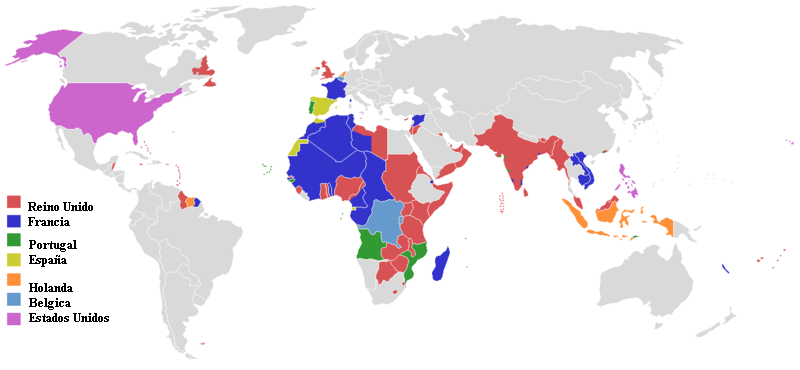
In 1960, 17 African states became independent: 14 from France, 2 from Britain and 1 from Belgium. Their accession transformed the United Nations and made anticolonial sovereignty a global political force. Yet independence rarely meant a clean transfer of power. Colonial borders, currencies, military agreements, debt, concessions and expatriate control over administration and commerce survived the lowering of flags.
The “Year of Africa” therefore names both a breakthrough and a contested settlement. France institutionalised influence through cooperation agreements and the CFA franc; Belgium withdrew from the Congo after a rushed transition while Belgian officers and mining interests retained leverage; Britain transferred formal authority while protecting strategic and commercial ties. See the wider /timeline and the archive’s account of /neocolonies.
Key takeaways
- Seventeen African states became independent in 1960, including fourteen formerly governed by France, two by Britain and one by Belgium.
- Independence transferred international sovereignty but often preserved colonial currencies, military agreements, commodity concessions, borders and administrative structures.
- Sixteen African states joined the United Nations on 20 September 1960, fundamentally expanding the diplomatic weight of anticolonial governments.
- The Congo crisis exposed the lethal power of Belgian interests, mining capital and Cold War intervention after formal colonial rule ended.
- The Year of Africa accelerated liberation across the continent while leaving unresolved struggles in Algeria, Portuguese Africa, Southern Rhodesia, Namibia and South Africa.
Before 1960: empire under pressure
At the start of 1960, most of Africa remained under European rule, although decolonisation had accelerated after the Second World War. Libya became independent in 1951; Sudan, Morocco and Tunisia followed in 1956; Ghana in 1957; Guinea in 1958. Algeria’s war against France, begun in 1954, exposed the violence required to preserve settler colonialism. Britain detained approximately 80,000 Kikuyu and other suspects at the peak of the Kenyan Emergency in 1954, according to historian Caroline Elkins; her broader estimate of people passing through detention and emergency villages is much higher and remains debated.
European rule had reorganised economies around export commodities and metropolitan needs. In the Belgian Congo, copper, cobalt, diamonds and uranium enriched concessionary companies while political preparation for Congolese rule was deliberately restricted. At independence on 30 June 1960, the Congo had only about 30 African university graduates, a figure commonly reported by contemporary observers and later historians, though definitions of degree-level education vary.
France’s 1958 constitution replaced the French Union with the French Community. In the referendum of 28 September 1958, Guinea alone voted “no” and chose immediate independence under Ahmed Sékou Touré. France withdrew officials and equipment, signalling the possible cost of rejecting a managed settlement.
“We prefer freedom in poverty to riches in slavery.” — Ahmed Sékou Touré, address to Charles de Gaulle in Conakry, 1958
What happened: seventeen transfers of sovereignty
The sequence began with French Cameroon and ended with Mauritania. Fourteen new states emerged from French rule, reflecting President Charles de Gaulle’s decision to negotiate transfers while preserving French networks of defence, finance, diplomacy and business—later associated with Françafrique. Nigeria and British Somaliland came from British rule; the latter united with the former Italian Somaliland on 1 July 1960 to form the Somali Republic. Belgium granted Congolese independence after only about 5 months of formal preparation following the Brussels Round Table of January–February 1960.
| Date | Event | Consequence |
|---|---|---|
| 1 January 1960 | French Cameroon becomes independent as Cameroon | Ahmadou Ahidjo leads a state still fighting the UPC insurgency. |
| 27 April 1960 | Togo becomes independent from French UN trusteeship | Sylvanus Olympio becomes prime minister of a sovereign republic. |
| 26 June 1960 | Madagascar becomes independent | French cooperation agreements preserve defence and economic links. |
| 26 June 1960 | British Somaliland becomes independent | It exists separately for 5 days before union with Italian Somaliland. |
| 30 June 1960 | Congo becomes independent from Belgium | Army mutiny begins on 5 July 1960; Belgian intervention and secession follow. |
| 1 July 1960 | Somali Republic is formed | British and Italian-administered territories unite. |
| 1 August 1960 | Dahomey, now Benin, becomes independent | Hubert Maga inherits a fragile regional political settlement. |
| 3 August 1960 | Niger becomes independent | French military and monetary influence continues. |
| 5 August 1960 | Upper Volta, now Burkina Faso, becomes independent | Maurice Yaméogo establishes a centralised presidency. |
| 7 August 1960 | Côte d’Ivoire becomes independent | Félix Houphouët-Boigny retains close French economic ties. |
| 11 August 1960 | Chad becomes independent | François Tombalbaye governs a territorially divided state. |
| 13 August 1960 | Central African Republic becomes independent | David Dacko succeeds within a French security sphere. |
| 15 August 1960 | Congo-Brazzaville becomes independent | Fulbert Youlou becomes president. |
| 17 August 1960 | Gabon becomes independent | French oil, timber and military interests remain powerful. |
| 20 August 1960 | Senegal leaves the Mali Federation | The federation, independent since 20 June 1960, breaks apart after 2 months. |
| 22 September 1960 | Mali declares separate independence | Modibo Keïta pursues socialist and pan-African policies. |
| 1 October 1960 | Nigeria becomes independent | Africa’s most populous colony enters federal sovereignty. |
| 28 November 1960 | Mauritania becomes independent | Morocco initially disputes its sovereignty. |
Madagascar and the Mali Federation were each counted within the conventional total of 17 independence outcomes in 1960; Senegal and Mali’s subsequent separation explains why simple lists can appear inconsistent.
The numbers and the unequal terms
The most visible figure is 17 independent states in 1960. The continental total rose from 9 independent African UN member states at the start of 1960 to 26 by year’s end, depending on whether transcontinental or disputed classifications are included; the UN admitted 16 African states on 20 September 1960, while Mauritania’s admission was delayed until 27 October 1961 by a Soviet veto linked to Mongolia’s membership.
Sovereignty came with structural constraints. France maintained the CFA franc, created in 1945, and required member states’ monetary institutions to hold substantial foreign-exchange reserves through arrangements tied to the French Treasury; the precise deposit requirement changed repeatedly after 1960. Defence and cooperation treaties enabled French troops, advisers and officials to remain. Governments that accepted these terms gained budgetary and military support but surrendered room for independent monetary and foreign policy.
In the Congo, the Force Publique’s approximately 25,000 soldiers in 1960 had no African commissioned officers at independence, according to standard historical accounts. Katanga, source of roughly 60% of Congolese export revenue in 1960 in contemporary estimates, seceded on 11 July 1960 under Moïse Tshombe with Belgian backing and mining-company support. These arrangements form part of the history traced at /neocolonies.
The central question is not whether flags changed in 1960, but which institutions still controlled money, minerals, armed force and external recognition.
What 1960 set in motion
The new states changed multilateral politics. On 14 December 1960, the UN General Assembly adopted Resolution 1514, the Declaration on the Granting of Independence to Colonial Countries and Peoples, by 89 votes to 0, with 9 abstentions. It declared colonial rule incompatible with fundamental human rights and strengthened campaigns against Portuguese empire, settler rule in Southern Rhodesia, South African control of Namibia and apartheid.
The Congo showed how quickly formal independence could be attacked. Prime Minister Patrice Lumumba was dismissed in September 1960, captured and murdered in Katanga on 17 January 1961 by Congolese and Katangan personnel in the presence of Belgian officers. A Belgian parliamentary inquiry reported in 2001 that particular Belgian officials bore “moral responsibility”; declassified evidence also documents CIA plots against Lumumba in 1960, although the operatives who killed him were not American. The Congo crisis became a Cold War battleground and helped Joseph-Désiré Mobutu seize power in 1965.
In South Africa, police killed 69 people and wounded 180 at Sharpeville on 21 March 1960, according to the official inquest figures. The apartheid state banned the African National Congress and Pan Africanist Congress on 8 April 1960. The ANC and PAC subsequently created armed organisations in 1961, connecting Southern Africa’s liberation wars to the wider decolonisation era.
Continental cooperation advanced through the Organisation of African Unity, founded by 32 states on 25 May 1963. Its defence of inherited borders reduced interstate territorial revision but preserved boundaries drawn by imperial powers. Explore these connected events on the /timeline.
How the Year of Africa is remembered
Official commemorations often present 1960 as a parade of flags, anthems and founding presidents. That memory captures a real victory: millions ceased to be colonial subjects, African governments acquired votes in international institutions, and explicit European sovereignty became politically indefensible. It can also obscure women organisers, trade unionists, rural rebels and exiles whose campaigns forced imperial concessions.
The phrase “Year of Africa” should not imply that empire ended uniformly. Algeria remained at war until 1962; Portuguese colonies fought until 1974–1975; Zimbabwe achieved internationally recognised independence in 1980; Namibia in 1990. In 1960 itself, France’s war in Cameroon continued after the independence ceremony, while Britain declared a State of Emergency in Nyasaland in 1959 before Malawi’s independence in 1964.
A critical remembrance distinguishes sovereignty from economic emancipation without dismissing independence as cosmetic. The transfers of 1960 created legal and political tools later used to nationalise resources, support liberation movements and demand a New International Economic Order. They also left successor governments operating states designed for extraction, with narrow tax bases, coercive security services and economies exposed to commodity prices. The relationship between these inheritances and present extraction is examined in /neocolonies.
Sources & further reading
- United Nations: Declaration on the Granting of Independence to Colonial Countries and Peoples
- Frederick Cooper, Africa Since 1940: The Past of the Present
- Martin Meredith, The State of Africa
- Georges Nzongola-Ntalaja, The Congo from Leopold to Kabila
- United Nations: History of Peacekeeping in the Congo
- South African History Online: Sharpeville Massacre, 21 March 1960
Frequently asked questions
- Why was 1960 called the Year of Africa?
- It was called the Year of Africa because 17 African states achieved independence during 1960: 14 from France, 2 from Britain and 1 from Belgium. Sixteen African states entered the United Nations together on 20 September 1960. The rapid transformation made African governments a major voting bloc and gave new force to campaigns against colonialism, apartheid and white-minority rule.
- Which African countries became independent in 1960?
- The conventional list comprises Cameroon, Togo, Madagascar, the Democratic Republic of the Congo, Somalia, Benin, Niger, Burkina Faso, Côte d’Ivoire, Chad, the Central African Republic, the Republic of the Congo, Gabon, Senegal, Mali, Nigeria and Mauritania. British Somaliland was separately independent for 5 days in 1960 before uniting with former Italian Somaliland as Somalia.
- What were the terms of African independence in 1960?
- Terms varied, but many transfers protected European power through defence treaties, military bases, technical advisers, trade preferences, mining concessions and monetary arrangements. France retained especially dense influence through cooperation agreements and the CFA franc system, established in 1945. Belgium left the Congo on 30 June 1960 without an African commissioned officer corps and with Belgian commercial interests still dominating major mineral assets.
- How did the Congo crisis challenge independence in 1960?
- Within 2 weeks of independence on 30 June 1960, the Congolese army mutinied, Belgium intervened and mineral-rich Katanga seceded on 11 July under Moïse Tshombe. Prime Minister Patrice Lumumba was removed, captured and murdered on 17 January 1961. Belgian officers were present at his killing, while declassified records show that the CIA separately plotted against him in 1960.
- How did Sharpeville affect the Year of Africa?
- South African police killed 69 people and wounded 180 at an anti-pass protest in Sharpeville on 21 March 1960, according to official inquest figures. The government banned the African National Congress and Pan Africanist Congress on 8 April 1960. The massacre intensified international opposition to apartheid and helped push both movements toward armed organisations formed in 1961.
Related chapters
Years
- 1492 and the Opening of the Atlantic World
- 1519–1521: The Spanish Conquest of the Aztec Empire
- 1652: The Founding of the Dutch Cape Colony
- 1757: Plassey and the East India Company’s Conquest
- 1791–1804: The Haitian Revolution
- 1833–1838: British abolition and slave-owner compensation
- 1857: The Indian Rebellion against Company Rule
- 1884–1885: Berlin Conference and Africa’s Partition
- 1904–1908: The Herero and Nama Genocide
Sources & further reading
CC BY 4.0 ·